
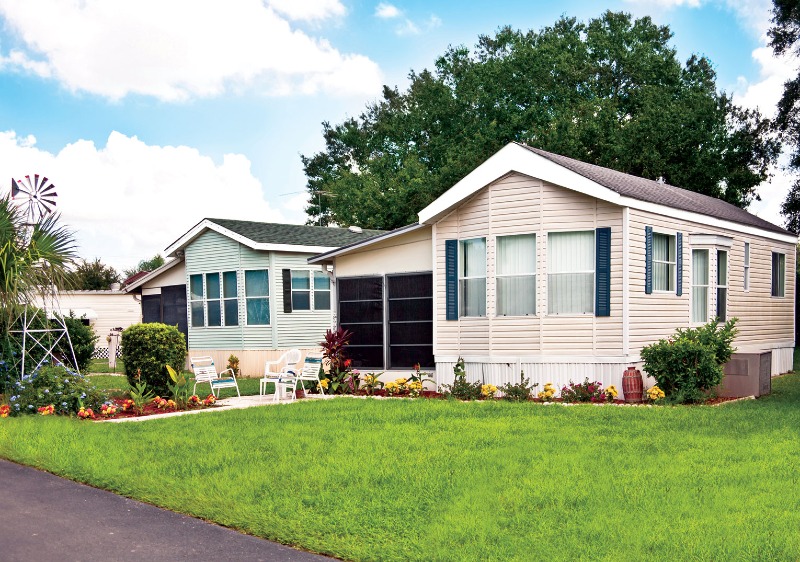
Manufactured home sales in our rural area continue to represent a significant percentage of the residential sales in this market. The advantages of quicker installation, along with the fact that they are generally less expensive than site-built homes, make this housing option attractive. If you are considering a manufactured home as an alternative to building, or if you are thinking about purchasing an existing manufactured home, here are a few things to consider that may make its future resale a little easier.
Homes built after 1976 and delivered with axles attached to the frame are considered manufactured homes (homes built before that date are considered mobile homes). Each section of a manufactured home should have a serial number stamped on the foremost crossmember of the frame, along with a red aluminum HUD label bearing a unique sequential number attached to the exterior end of the home.
Homeowners should take care not to remove or paint over these labels, as they must be present for many types of financing. All manufactured homes that meet nationwide HUD standards have a data plate, also known as a Compliance Certificate, attached to the structure. This document contains important information such as the date of manufacture, HUD numbers, serial number, roof snow load, and other construction specifications.
The data plate can usually be found under the kitchen sink, inside a bedroom closet, or inside the electrical panel. Snow load information is especially important when installing a new home because requirements differ among jurisdictions, and microclimates can vary greatly in annual snowfall. Although manufactured homes are initially titled like a motor vehicle, they are often converted to real property by eliminating the title when an institutional lender is involved. This assures the lienholder that the collateral cannot be removed from the property because the home cannot legally be moved without a title.
Most lenders require a permanent foundation complete with tie-downs and concrete runners. Many contractors simply follow county installation guidelines rather than going the extra mile to meet FHA and VA standards, which require longitudinal tie-downs as well as lateral tie-downs. In addition, some contractors neglect to obtain the required Washington State Department of Labor & Industries (L&I) permits when modifications, such as lean-to porches, are added.
Certification by a structural engineer is also required for FHA loans. Even though most manufactured homes are bottom-wrapped with their own vapor barrier, lenders typically require an additional vapor barrier on the surface of the ground. Thinking ahead to the time when you decide to sell your property can make the process much easier than retrofitting the home at the point of sale.